Full depth reclamation (FDR) is a pavement rehabilitation method that pulverizes existing asphalt layers, then reuses and compacts the materials to create a new, stabilized foundation. Unlike patching, crack filling, or resurfacing, FDR addresses structural pavement failures rather than surface-level deterioration.
At Landmark Paving, we perform full depth reclamation projects for commercial and municipal clients across Florida. In this guide, we’ll explain how the process works, when it’s the right solution, and how it compares to other asphalt pavement repair methods.
How Full Depth Reclamation Works as an Asphalt Restoration Method
FDR is an asphalt restoration process that rebuilds a pavement structure without removing and replacing all existing materials.
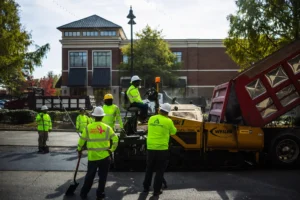
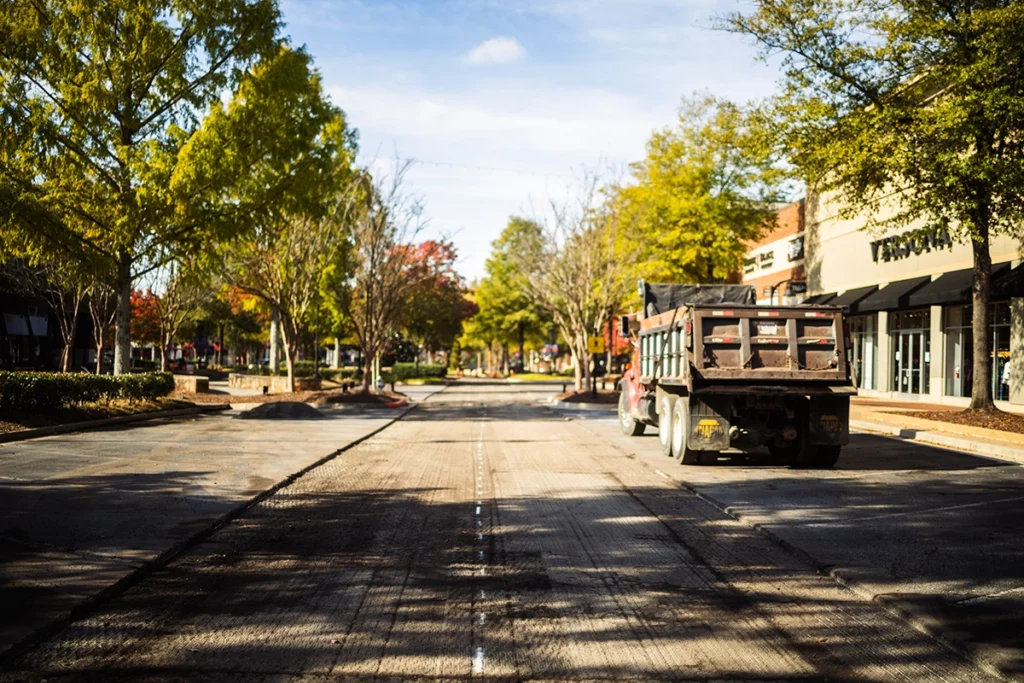
Instead of hauling away damaged asphalt and importing new aggregate, specialized equipment pulverizes all layers of existing asphalt. That material is then processed, stabilized, compacted, and used as the homogeneous foundation for fresh asphalt.
When Is Full Depth Reclamation Used?
Full depth reclamation is typically used when pavement problems extend beyond the asphalt surface and into the underlying base layer. While surface treatments such as crack filling, patching, and resurfacing can address minor deterioration, they are often ineffective when the pavement structure itself has failed.
FDR is commonly used to address:
- Widespread Alligator Cracking: Extensive alligator cracking often signals base failure rather than normal surface wear. When this type of cracking covers a large portion of the pavement, surface repairs rarely provide a long-term solution.
- Rutting or Pavement Deflection: If pavement develops wheel-path depressions or flexes under vehicle loads, the supporting base may have lost its structural integrity.
- Advanced Pavement Age: Commercial asphalt pavements typically last 20–30 years with proper maintenance. Older pavement that has not undergone structural rehabilitation may require FDR to restore performance.
- Repeated Repair Failures: Areas that have been patched, repaired, or resurfaced multiple times without lasting results often have underlying base problems that surface-level repairs cannot correct.
Understanding the Full Depth Reclamation Process
While every project varies based on site conditions, the FDR process generally follows three primary phases: pulverization and stabilization, grading and compaction, and surface course installation.
Phase 1 — Pulverization and Stabilization
A reclaimer machine grinds the existing asphalt pavement and a portion of the base layer into reusable material. Stabilizing agents may then be added to strengthen the reclaimed base.
Phase 2 — Grading and Compaction
Once reclaimed materials are stabilized, crews grade the surface to the desired profile. The material is then compacted with heavy rollers until the required density is achieved. Depending on the stabilization method used, the base may require several days of curing before paving can begin.
Phase 3 — New Asphalt Installation
After the stabilized base passes testing and inspection, crews install new asphalt over the reclaimed base. From there, the final elements, such as pavement markings, ADA striping, and traffic control markings, are applied.
Full Depth Reclamation vs. Other Asphalt Repair Methods
| Method | Best For | Depth Addressed | Cost Range |
|---|---|---|---|
| Crack Filling | Minor pavement cracks | Surface | Low |
| Patching | Localized failures | Partial depth | Low–Moderate |
| Infrared Repair | Small damaged areas | Surface to partial depth | Moderate |
| Mill-and-Overlay | Surface deterioration | Top asphalt layer | Moderate |
| Full Depth Reclamation | Structural pavement failure | Asphalt and base | High |
| Full Reconstruction | Complete pavement failure | Entire pavement structure | Highest |
Not Sure if Full Depth Reclamation Is Right for Your Property?
Surface damage doesn’t always tell the full story. If your parking lot or roadway continues to develop cracks, rutting, or recurring failures despite previous repairs, the underlying base may be the real issue.
At Landmark Paving, we can assess your pavement condition and help determine whether full depth reclamation, resurfacing, patching, or reconstruction is the most cost-effective solution for your property.
Schedule a pavement assessment to get started.
FAQs — Full Depth Reclamation
How long does full depth reclamation last?
Properly designed FDR pavement can last 20–30 years when combined with regular maintenance.
How much does full depth reclamation cost?
Project costs vary based on site conditions, stabilization methods, pavement thickness, and project size. Contact us today to get an accurate quote.
How do I know if my pavement needs FDR or resurfacing?
Widespread alligator cracking, rutting, and pavement deflection often indicate structural failure beneath the surface. A professional pavement evaluation can determine whether resurfacing alone will be effective.
Can full depth reclamation be used on parking lots?
Yes. Commercial parking lots are one of the most common locations for FDR projects in Florida.
What stabilizing agent is used during FDR?
The most common stabilizing agents are portland cement, lime, and asphalt emulsion. The best option depends on site conditions, pavement composition, and engineering requirements.