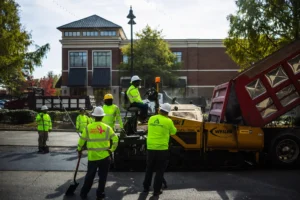
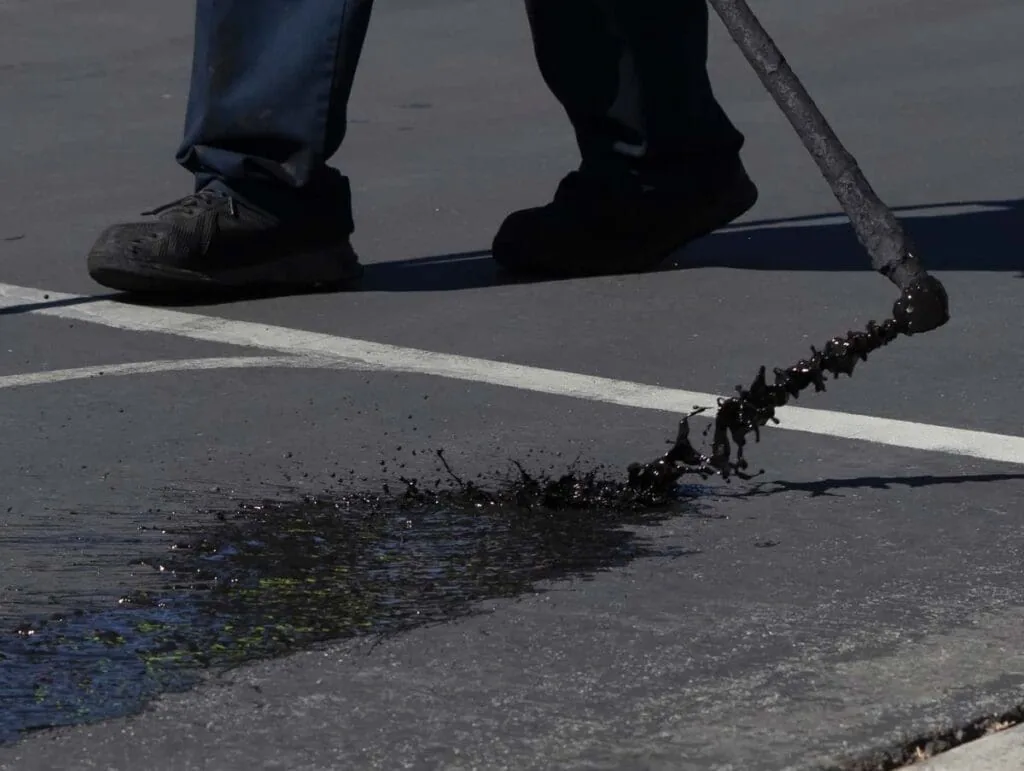
Parking lot sealcoating is the application of liquid protective coating over an existing asphalt surface. After drying, the surface helps protect commercial asphalt from everyday wear, sun exposure, water, and oxidation. In Florida, frequent rain, warm temperatures, heavy traffic, and long periods of sun can all affect how quickly an asphalt surface shows signs of wear.
There is no single asphalt parking lot sealcoating schedule that works for every property. The better approach is to inspect your pavement regularly and schedule maintenance based on its condition, traffic, drainage, and previous treatments.
Landmark Paving works with commercial properties throughout Florida to maintain asphalt parking lots and plan repairs before minor problems become more extensive. Here’s what we think you should know about parking lot sealcoating in Florida, including timing, cost, and ADA compliance.
How Often Should Sealcoating Be Applied to a Florida Parking Lot?
Property managers should evaluate most commercial parking lots for sealcoating every two to three years, but there is no set schedule that perfectly fits every Florida property. Sun, heat, rain, traffic, drainage, and previous application quality can all affect how quickly sealcoat wears.
Annual pavement inspections are the best way to determine when it is time for another treatment. Fading, exposed aggregate, worn traffic lanes, and early surface deterioration can signal that the previous sealcoat is wearing away. Prioritize repairing cracks, potholes, depressions, and alligator cracking before sealcoating.
Traffic and Property Use
Busy retail centers, multifamily communities, schools, and medical facilities may experience faster wear than lower-traffic office or storage properties. Frequent turning, delivery trucks, standing water, and direct sun exposure can also affect how the surface performs.
Previous Application and Pavement Condition
Sealcoat performance depends on asphalt condition, surface preparation, drainage, repairs, and the product and application specifications used. Existing oxidation or standing water may also affect how long the treatment performs.
When to Sealcoat New Asphalt
It is important to wait for fresh asphalt to cure before sealcoating. Exact timing varies based on pavement conditions and product requirements, and applying sealcoat too early can affect adhesion. Landmark Paving can evaluate new asphalt and recommend an appropriate schedule.
Signs Your Parking Lot Is Ready for Sealcoating
Your parking lot may be ready for sealcoating if you notice:
- Asphalt fading from deep black to gray
- More visible surface aggregate
- Water no longer shedding properly
- Fine surface deterioration
- Worn areas in high-traffic lanes
- Faded parking lot striping
Potholes, alligator cracking, depressions, and base failure require repair first. Sealcoating is preventive maintenance and cannot correct structural pavement damage.
What Is the Best Time to Sealcoat in Florida?
Sealcoating requires dry pavement, suitable temperatures, and enough rain-free time for proper application and curing. Humidity, local weather, and product requirements can also affect scheduling.
Florida’s wet season varies by region. In West Central Florida, for example, it typically runs from late May into October. Drier months may provide more predictable application windows in many Florida markets, but contractors should always schedule around current conditions and manufacturer requirements.
Plan Repairs, Sealcoating, and Striping Together
Planning repairs, sealcoating, and parking lot striping and pavement markings together can reduce repeat closures and keep work in the right order:
- Inspect pavement and drainage.
- Clean and prepare the surface.
- Complete necessary crack and pavement repairs.
- Apply the sealcoat and allow it to cure.
- Restore pavement markings.
- Reopen the lot according to contractor instructions.
ADA and Pavement-Marking Considerations
Property managers may opt to coordinate parking lot sealcoating and striping. When restriping, preserve the required accessible parking spaces and access aisles. Project planning should also account for signs, accessible routes, slopes, and required dimensions. Review federal standards along with applicable Florida and local ADA parking lot requirements.
Minimizing Disruption to Tenants and Customers
Contractors can often complete large commercial parking lot sealcoating in phases to maintain access. Identify alternate entrances and parking, notify occupants in advance, and schedule around deliveries and busy periods. Keep traffic off freshly treated areas until Landmark Paving confirms they are ready to reopen.
What Affects Parking Lot Sealcoating Cost?
Parking lot sealcoating cost varies by project. Key factors include:
- Total parking lot size
- Existing pavement condition
- Cleaning and surface preparation
- Crack filling and surface patching needs
- Material and application specifications
- Required re-striping
- Phased access or after-hours scheduling
An on-site assessment can help determine the work your pavement needs and provide a more accurate project estimate.
Schedule a Florida Parking Lot Assessment
Not sure if your parking lot is ready for sealcoating? Landmark Paving can assess your pavement, identify priority repairs, and coordinate sealcoating, striping, and ADA requirements. We can also develop a phased plan to help maintain property access during the project.
Contact Landmark Paving to schedule a commercial parking lot assessment in Florida.
Frequently Asked Questions
What is sealcoating a parking lot?
Sealcoating a parking lot is the process of applying a liquid protective coating over an asphalt parking lot. It helps rejuvenate the surface and protect it from oxidation, sun, water, and everyday wear.
How often should you sealcoat a parking lot in Florida?
Most commercial lots should get an evaluation every two to three years and inspected annually. Actual timing depends on pavement condition, traffic, drainage, and exposure.
How long does parking lot sealcoating take?
The timeline depends on lot size, repairs, weather, and curing requirements. Contractors can often complete large lots in phases to maintain access.
How much does parking lot sealcoating cost?
Cost depends on lot size, pavement condition, preparation, repairs, material specifications, striping, and scheduling. An on-site assessment provides the most accurate estimate.
Can you sealcoat a parking lot in the rain?
No. Sealcoating requires dry pavement and a suitable rain-free window for application and curing.
Does sealcoating cover parking lot cracks?
No. You should address cracks before sealcoating, including potholes, alligator cracking, depressions, and pavement failure.