Recurring potholes, spreading cracks, loose aggregate, and puddles that return after every storm point to developing pavement problems. For Florida commercial properties, timely asphalt parking lot repair addresses damage before it spreads and disrupts traffic, parking, or drainage.
With more than 20 years of paving experience, Landmark Paving understands how surface wear, supporting layers, and drainage affect the right repair approach. Below, we cover six common parking lot problems, the repair options available, and when to request a professional assessment.
How Florida’s Climate Contributes to Parking Lot Damage
Florida’s intense sunlight, heat, frequent rainfall, and steady vehicle traffic place ongoing stress on commercial asphalt. Over time, this combination contributes to parking lot damage such as brittle pavement, recurring puddles, loose material, and deterioration along busy drive lanes.
Sun Exposure and Surface Aging
Asphalt binder gradually oxidizes and hardens as pavement ages, while environmental exposure contributes to surface deterioration. Fading may signal aging, but property managers should also watch for cracking and aggregate loss since color alone does not indicate structural condition. Sealcoating protects suitable pavement, with application timing based on pavement condition, traffic, and product recommendations.
Rainfall, Water Intrusion, and Drainage
Water that enters cracks or collects on damaged pavement may weaken susceptible supporting materials, especially under repeated traffic. After heavy Florida storms, inspect areas that repeatedly stay wet near drains, entrances, and loading zones. Proper drainage depends on the property’s grades, outlets, soil conditions, and groundwater.
The 6 Most Common Asphalt Parking Lot Problems
Recognizing common pavement distress makes it easier to determine what needs further assessment. The Federal Highway Administration Research and Technology identifies several asphalt distress types, including fatigue cracking, potholes, longitudinal and transverse cracking, and raveling.
Potholes
Potholes appear as depressions where pavement material has broken away, often leaving rough edges that collect water. Recurring potholes deserve a closer look at the pavement and supporting layers beneath the surface.
Alligator Cracking in Asphalt
Alligator cracking forms interconnected, scale-like cracks, often in areas exposed to repeated traffic loads. This fatigue cracking points to inadequate pavement thickness or weakened support, so assessing the pavement structure is important.
Longitudinal and Transverse Cracks
Longitudinal cracks run lengthwise along the pavement, while transverse cracks run across it. Crack width, movement, edge condition, and surrounding deterioration influence the appropriate repair.
Surface Raveling and Aggregate Loss
Raveling leaves asphalt rough or pitted as aggregate particles break loose from the surface. The depth and extent of material loss determine whether the pavement needs surface maintenance or a more substantial repair.
Parking Lot Drainage Problems
Recurring puddles, settled pavement, blocked inlets, or runoff toward buildings signal parking lot drainage problems. Repairs require clearing drains, correcting grades, or repairing drainage infrastructure while preserving accessible parking requirements. Accessible spaces and access aisles must have slopes no steeper than 1:48, according to the U.S. Access Board.
Oxidation and Surface Weathering
Fading and surface hardening indicate asphalt aging, but property managers should assess these signs alongside cracking and other deterioration. Protective maintenance provides the most value while the pavement remains in suitable condition.
Asphalt Repair Methods: Which Fix Matches the Problem?
Similar-looking pavement damage often requires different asphalt repair methods based on surface condition, supporting layers, and drainage. A proper assessment identifies the damage source and the appropriate repair depth.
Asphalt Parking Lot Crack Repair
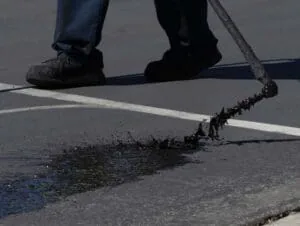
Crack sealing accommodates pavement movement, while crack filling treats cracks with limited movement. Proper asphalt parking lot crack repair requires cleaning, preparation, and suitable materials to limit water entry. However, it does not restore structural strength to fatigue-cracked pavement.
Infrared Repair for Localized Surface Damage
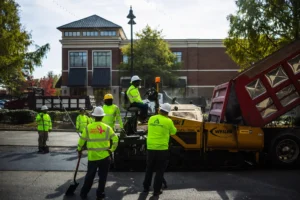
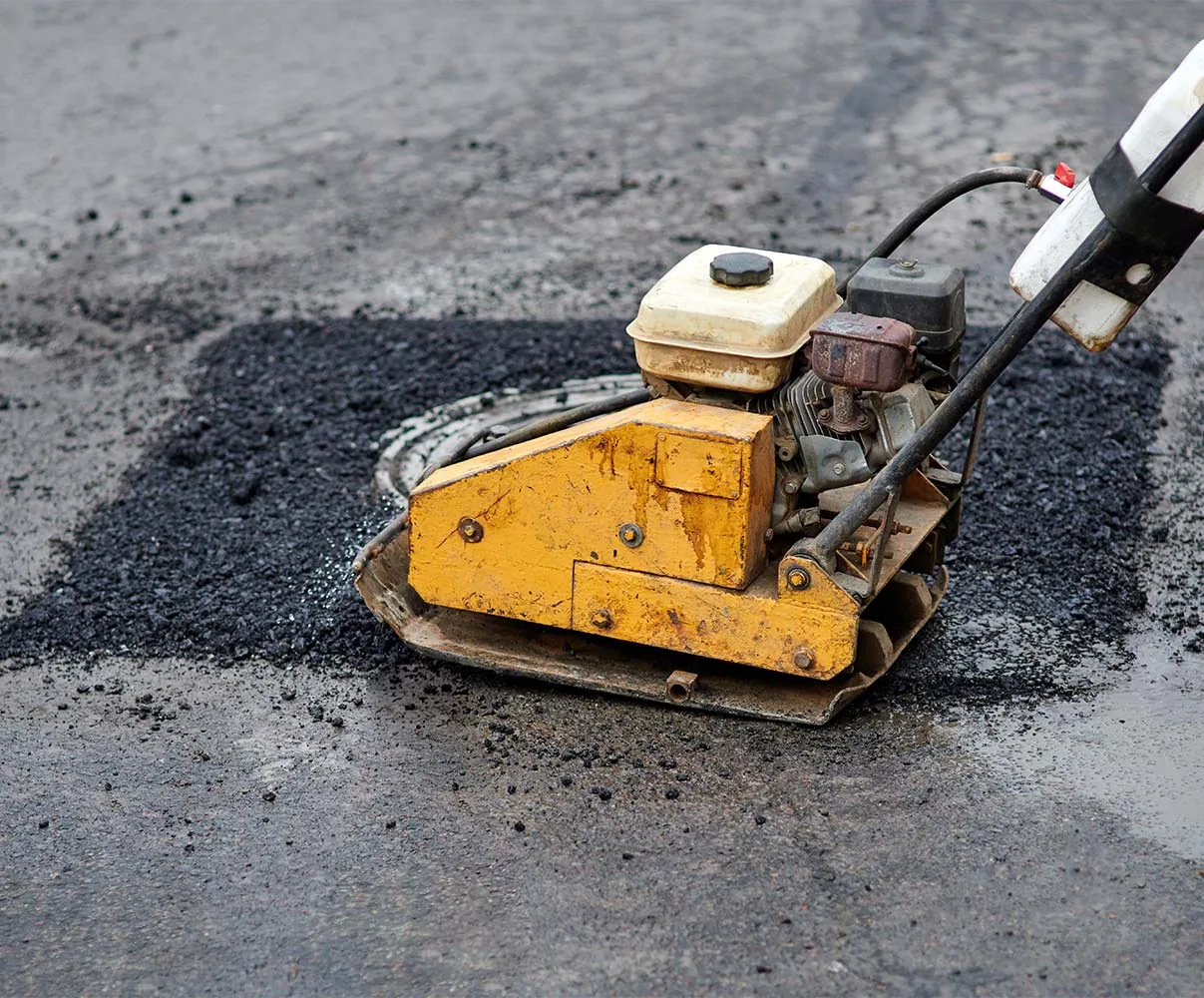
Infrared equipment heats and softens existing asphalt so crews can rework, add suitable material, and compact the repair area. Infrared asphalt repair suits localized damage with sound underlying support, while failed supporting layers require deeper repairs.
Full-Depth Patching for Parking Lot Pothole Repair
For deeper parking lot pothole repair, crews remove failed pavement, inspect and repair the supporting material, then install and compact new asphalt. Pothole repair addresses the full extent of weakened material, including damage beyond the visible hole.
Sealcoating for Suitable Weathered Surfaces
Sealcoating protects serviceable asphalt as part of a preventive maintenance plan, typically after crews address existing cracks and potholes. It does not replace missing pavement, correct drainage grades, or repair structural failure.
Resurfacing or Reconstruction for Widespread Damage
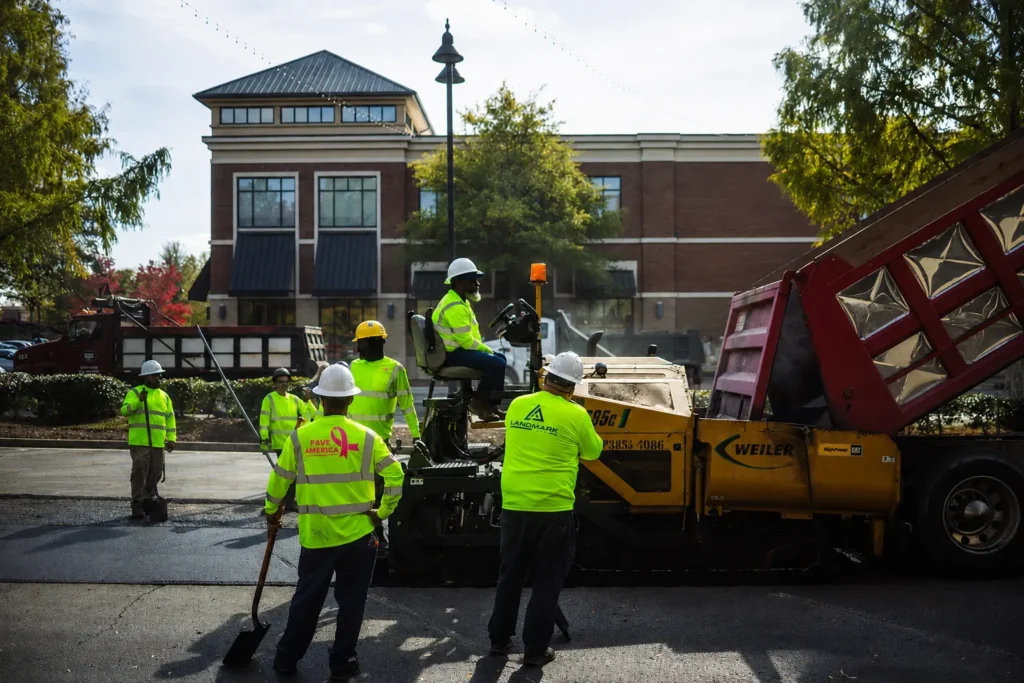
Milling removes existing asphalt, while an overlay adds a new asphalt layer over a prepared surface. Parking lot resurfacing and paving suit pavement with adequate structural support, while widespread structural failure requires deeper rehabilitation or reconstruction.
What Affects Asphalt Parking Lot Repair Costs in Florida?
Asphalt parking lot repair cost depends on the repair area, depth, method, site access, and underlying pavement conditions. Treating individual cracks requires a different scope than replacing failed sections or rehabilitating a larger lot. A useful estimate should outline quantities, preparation, materials, drainage work, and restoration requirements.
Repair vs. Replace: How to Decide
Compare the extent of damage, recurring failures, drainage performance, repair history, and future use when weighing repair against replacement. Landmark Paving provides an on-site assessment and written proposal. This provides property managers enough information to understand the recommended scope and compare proposals based on equivalent work rather than price alone.
4 Mistakes to Avoid When Planning Parking Lot Repairs
- Treating the surface without investigating recurring failure: Repeated damage in the same area often warrants an assessment of the supporting layers and drainage.
- Choosing a patch without understanding its purpose: Ask whether the proposed repair addresses an immediate hazard, the underlying failure, or both.
- Waiting for manageable damage to become disruptive: Track changes and schedule an assessment when cracks spread, material loosens, or potholes develop.
- Comparing quotes by total price alone: Compare removal depth, base work, materials, drainage corrections, traffic management, and exclusions before choosing a proposal.
FAQs
What causes potholes in asphalt parking lots?
Potholes form when weakened pavement breaks apart under traffic, often after water intrusion, cracking, or inadequate support contributes to deterioration. Recurring potholes often point to deeper pavement or drainage problems.
Can you repair alligator cracking without replacing the whole lot?
Yes. Crews often repair localized alligator cracking by removing failed pavement and correcting supporting-layer problems. Widespread fatigue cracking requires a broader assessment for rehabilitation or reconstruction.
How much does parking lot asphalt repair cost in Florida?
Parking lot asphalt repair costs vary based on the repair method, damaged area, repair depth, and condition of the supporting layers. Drainage work, access restrictions, and project phasing also affect the final scope and price.
How often should a commercial parking lot be repaired or maintained?
Include pavement checks in routine property inspections and inspect the lot after major storms or reports of new damage. Schedule maintenance based on pavement condition and traffic, and address potholes and other immediate hazards promptly.
What is the difference between infrared repair and saw-cut patching?
Infrared repair heats and reworks existing asphalt for suitable localized surface defects. Saw-cut patching removes damaged pavement to reach supporting layers when deeper repairs are necessary.
Get Help Choosing the Right Repair for Your Parking Lot
Visible damage, recurring trouble spots, or drainage concerns deserve a closer look before they spread.
Landmark Paving serves commercial properties across Florida, including Orlando, Jacksonville, and Pensacola—contact Landmark Paving to request an on-site assessment.